
Additional Information
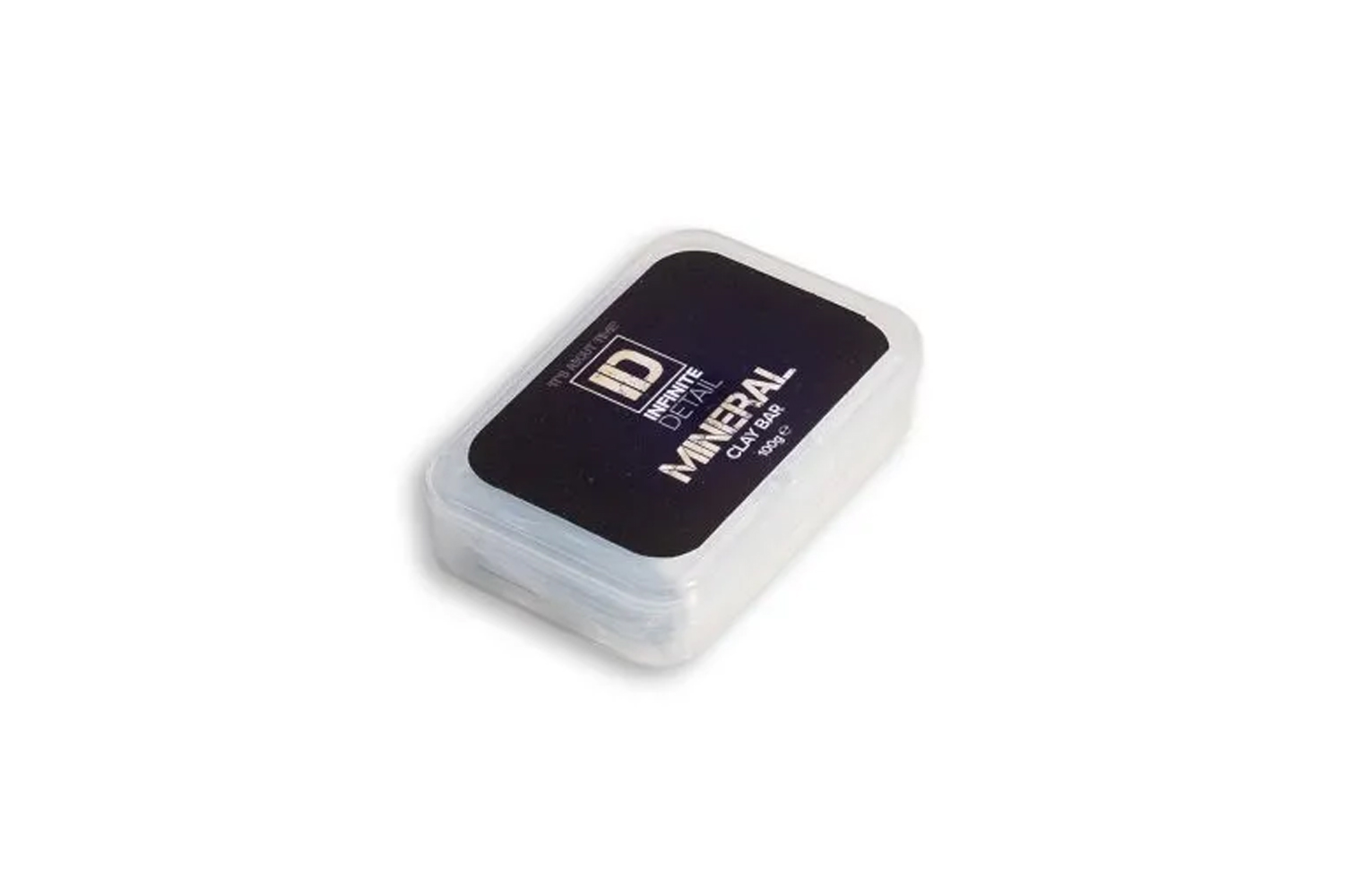
Mineral Clay Bar — Fine Grade Paint Decontaminant
Product overview
– The Mineral Clay Bar is a fine‑grade detailing clay formulated to safely remove embedded fallout, industrial contaminants, overspray, rail dust, and other bonded particles from painted surfaces.
– Its formulation is safe for use on automotive paint, metal, glass, wheel barrels, and exterior plastics when used with appropriate lubrication and technique.
– Regular use restores surface smoothness, improves gloss, and prepares substrates for polishing, sealing, or coating by enabling better adhesion.
Recommended conditions
– Work in a shaded, cool environment with the vehicle surface cool to the touch. Avoid direct sunlight and hot panels to prevent lubricant evaporation and poor clay performance.
Surface preparation
1. Wash: Perform a thorough wash using a pH‑neutral car shampoo to remove loose dirt and surface grime.
2. Dry or tack: Lightly dry large water drops; the surface must be free of coarse abrasives that could cause marring during claying.
Directions for use
1. Portioning: Remove an appropriate piece of the clay bar and roll it into a tight ball. Flatten into a thin, wide disc sized to fit comfortably in your palm.
2. Lubrication: Prepare a lubricant — either a dedicated clay lubricant or a mixture of 100 mL Comet Quick Detailer with 400 mL water (or as recommended by lubricant manufacturer). Generously mist or apply lubricant to a small working area.
3. Claying motion: Using light, even pressure, move the clay disc back and forth across the lubricated surface in short strokes (side‑to‑side). Do not press hard — the goal is to let the clay pick up contaminants, not abrade the clearcoat. You should feel slight resistance while the clay lifts embedded particles.
4. Progression: When the clay begins to glide smoothly with minimal resistance, the area is decontaminated. Wipe the area with a clean microfiber towel and move to the next panel, applying additional lubricant as required. Work panel by panel for best control.
5. Clay maintenance: Frequently inspect the clay’s surface. When contamination is visible, fold and knead the clay to expose a clean section, or reshape into a fresh disc. Replace the clay when it becomes saturated with contaminants or shows tears.
6. Final check: After claying, wipe the surface with an isopropyl alcohol blend or panel wipe if planning to polish or apply coatings, to ensure an oil‑free substrate.
Post‑treatment
– After claying, follow with polishing (if needed) and then apply your chosen wax, sealant, or ceramic coating to protect the freshly decontaminated surface and enhance gloss.
Precautions and tips
– Use only light pressure; excessive force can induce marring.
– Do not use a clay bar on very dry, hot paint or on surfaces with heavy grit; always ensure lubrication.
– Avoid dropping the clay on the ground — contaminated clay can scratch the surface. If dropped, either knead out contaminants thoroughly or replace the piece.
– Test on an inconspicuous area if unsure about compatibility with specialty coatings.
– Store clay in its resealable packaging or an airtight container to prevent contamination and drying.
Safety and disposal
– Keep product away from children and pets. Wash hands after use. Dispose of used clay in accordance with local waste regulations; do not flush into drains.